U.S. Department of Veterans Affairs (VA) – Caregiver Modernization Discovery & Roadmap
Leading trauma-informed field research, stakeholder discovery, and strategic product roadmapping to digitize the VA Family Caregiver benefits application (VA Form 10-10CG) on VA.gov.
| Key Metadata | Details |
|---|---|
| My Role | Lead Researcher & Designer |
| Primary Impact | Transitioned the Caregiver Program from a stressful paper/PDF form into an accessible online application on VA.gov; established a phased product roadmap; institutionalized trauma-informed research practices; built deep trust with VSOs, Veterans, and Caregivers.. |
| Federal Drivers | VA MISSION Act of 2018 (Mandated program expansion beginning October 1, 2019). |
| Team | USDS Product Owner, GovCIO Product Manager, Lead Researcher/Designer (myself), Lead Engineer, Associate Designer, Presidential Innovation Fellow (PIF). |
| Core Methods | Deep Qualitative Interviews, Contextual Inquiry, Trauma Stewardship Coaching, Technical Feasibility Discovery, VSO & Stakeholder Workshops, Phased Roadmapping. |
1. Challenge: Overcoming Bureaucracy and Distrust
Driven by the VA MISSION Act of 2018, the Department of Veterans Affairs was mandated to expand the Program of Comprehensive Assistance for Family Caregivers (PCAFC) beyond Post-9/11 Veterans.
Before this initiative, applying for caregiver benefits was a painful, paper-bound process:
- Paper-Only Barriers: The application (VA Form 10-10CG) existed solely as a static paper document or complex online PDF. Applicants had to hand-deliver or mail physical forms to a local VA facility, leaving them with no electronic proof of submission, no status tracking, and high anxiety over lost paperwork.
- Institutional Distrust & Fear: Many Veterans and family caregivers suffered from long-standing distrust of government systems. The application process added severe emotional stress to families already struggling with daily caregiving demands.
- Siloed & Conflicting Information: Caregivers had to navigate disparate websites and online forums, leading to conflicting eligibility information and unexpected denials.
Caregiver’s perspective: “We’re afraid to tell the interviewer how much we struggle, afraid they’ll take our kids away… that fear of them judging me and saying, ‘Oh, we’re going to take your kids away because your husband’s not safe to be with your kids.”
2. Strategic Research & Trauma-Informed Fieldwork
As Lead Researcher and Designer, I designed and conducted a multi-phase qualitative research strategy to explore the deep problem space. I brought together remote interviews with Veterans and caregivers across the nation alongside in-person sessions with Veteran Service Organizations (VSOs) and VA Caregiver Support Coordinators.
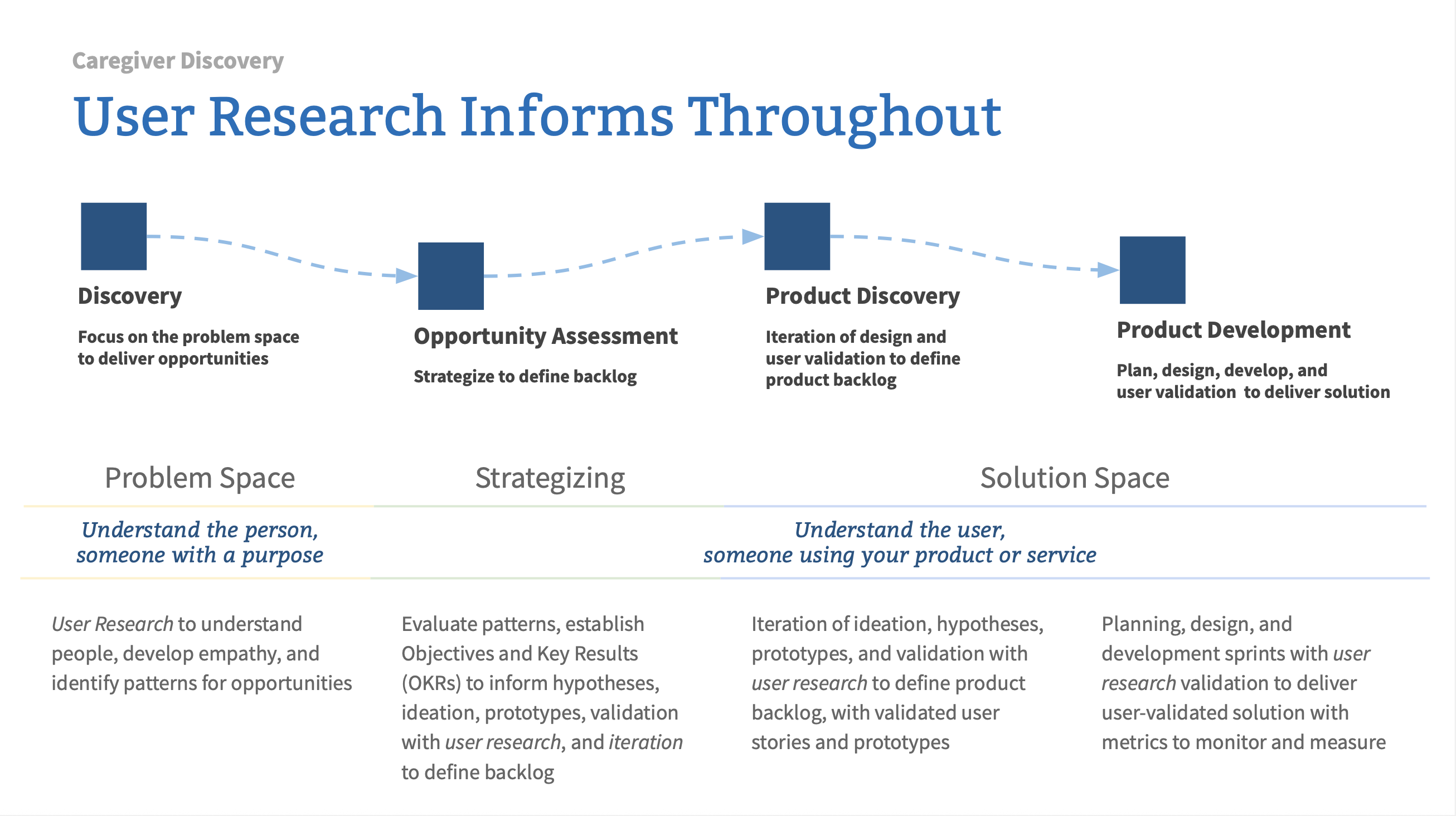
Contractor Product Manager Feedback: “I had never done user research before — I’m amazed by what we learned from these families and how it completely changed how we think about building software.”
🤝 Prioritizing Vulnerable Populations & Accessibility
- Inclusive Sampling: Prioritized participants with severe disabilities, mobility constraints, and varying levels of digital literacy.
- Trauma-Informed Principles: Offered flexible accommodations and shared interview topics in advance so participants could prepare emotionally for sensitive discussions.
🛡️ Trauma Stewardship & Staff Coaching
- Coaching Junior Staff: Conducting deep interviews about severe medical struggles, mental health, and financial distress was overwhelming for junior team members. I provided structured trauma stewardship coaching for an associate designer new to intensive qualitative research, helping her process difficult sessions and maintain researcher well-being.
- Mentoring Inter-Agency Fellows: Coached a Presidential Innovation Fellow (PIF) who was new to federal government operations, helping them navigate cross-agency dynamics and find their strategic voice.
- Guiding Industry Partners: Mentored our prime contractor Product Manager (GovCIO), introducing him to user research methodology and guiding him on how qualitative insights directly shape product backlogs.
3. Key Discovery Insights & Technical Solutions
Caregiver:“Usually when it comes to forms I am the elected representative of the relationship to get that done. He hates paperwork. The paperwork is necessary.”
Our User Research Findings discovery research findings shifted the team’s focus from simply “digitizing a form” to designing a holistic service ecosystem:
- Caregivers Are the Primary Applicants: Research revealed that caregivers—not Veterans—handle the majority of paperwork and administrative research. We rewrote form copy in plain language to match this real-world usage.
- Electronic Footprint & Legibility: Moving the form to VA.gov allowed applicants to complete questions at their own pace, save progress, and receive instant electronic confirmation of receipt, easing fears of lost paperwork.
- Single Source of Truth: Consolidated conflicting pages into a unified, authoritative PCAFC hub on VA.gov explaining clear eligibility criteria and next steps.
- Technical Feasibility & Pre-Built Components: Partnered with our lead engineer to evaluate the existing VA.gov design system, identifying pre-built React components, Save-in-Progress patterns, and API pathways to CARMA (Caregiver Record Management Application).
4. Phased Product Roadmap
To meet strict statutory deadlines while establishing a sustainable, long-term technical architecture, I authored a prioritized three-phase product roadmap:

Three-phase strategic product roadmap detailing MVP delivery, form enhancements, and authenticated caregiver account portals
- Phase 1 (MVP Launch): Fielded a user-centered, authoritative PCAFC guidance area on VA.gov paired with a responsive online VA Form 10-10CG application featuring submission confirmations.
- Phase 2 (Form & Resource Enhancements): Introduced searchable local caregiver resources, Save-in-Progress functionality, and online application status tracking.
- Phase 3 (Authenticated Caregiver Portal): Architected long-term technical specifications for distinct Caregiver user roles and personalized dashboards linked to Veteran profiles.
5. Outcomes & Institutional Legacy

The modernized, fully accessible VA.gov Family Caregiver Benefits portal and online 10-10CG application flow
- Live Digital Transformation: Successfully launched the online application framework on VA.gov (View Live VA Caregiver Portal), replacing physical paperwork with an accessible, plain-language digital service.
- Reduced Caregiver Anxiety: Delivered instant electronic submission receipts and clear status expectations, mitigating the fear and uncertainty experienced by military families.
- Elevated UX Maturity: Institutionalized trauma-informed research practices, cross-functional discovery, and collaborative roadmapping across USDS, VA CTO, and contractor delivery teams.
Visit the VA.gov Comprehensive Assistance for Family Caregivers